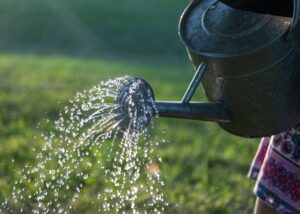
Watering

Regular watering is essential for summer bedding, vegetables, pots and hanging baskets, as well as newly planted trees, shrubs and herbaceous plants. Here’s how to water efficiently, reduce reliance on mains water, and help conserve a precious resource.

What you’ll need

  • Water butt
  • Watering can with a rose attachment
  • Water-retaining granules
  • Drip irrigation system
  • Hosepipe with a spray gun

Hatherop Road Allotments · Guide for new members

Regular watering is essential for summer bedding, vegetables, pots and hanging baskets, as well as newly planted trees, shrubs and herbaceous plants. Here’s how to water efficiently, reduce reliance on mains water, and help conserve a precious resource.

What you’ll need

  • Water butt
  • Watering can with a rose attachment
  • Water-retaining granules
  • Drip irrigation system
  • Hosepipe with a spray gun

Watering well

  • Water in the cool of the evening or very early morning, not during the day when most water evaporates before reaching the roots.
  • Apply water to the base of plants so it soaks down to the roots. In hot weather, give a good soak at intervals rather than a daily sprinkle.
  • Channel water to thirsty plants like tomatoes by burying a flowerpot alongside and filling that with water.
  • Store as much rainfall as you can in water butts from the roof of your house, garage, shed or greenhouse — it’s warmer and less of a shock to roots than mains water.
  • Add water-retaining granules to compost in pots, baskets and containers; roots draw moisture from the saturated granules as needed.
  • A hose with a spray gun saves time — pick one that doesn’t leak, with a flow control (40–100%). Aerated spray settings use less water.
Please note

You may only use drip irrigation if it comes from your water butt, within the Richmond upon Thames allotment T&Cs.

Extracts from Gardeners’ World

Which veg to water — and which to leave

Different vegetables have different needs, so target water where it matters most. Common veg fall into three groups.

Water throughout growth

Fast, continuously growing veg needing roughly 20 litres/m² per week in dry spells:

  • Lettuce, salad leaves, spinach
  • Oriental greens
  • Summer cabbage
  • Radish
  • Calabrese and cauliflower
  • Courgette and cucumber
  • Runner beans
Top tip

Soaking cauliflower and calabrese as the heads begin to swell increases their final size.

Water at key growth stages

  • Peas and broad beans — a good soak (20 l/m²) when the first flowers appear, and again as the young pods swell.
  • French beans — water when flowering and again as pods form.
  • Sweetcorn — a good soak once cobs form and the silks appear.
  • Pumpkins and squash — a few good soakings as fruits swell, targeting the centre of the plant.
  • Tomatoes, aubergines and peppers — once flowers set fruit, water regularly all summer (ideally 10 l/m² twice weekly).
  • Potatoes — once they finish flowering, wet the soil not the leaves, and water through growth to encourage new potatoes.
Top tip

Before going on holiday, sink pot-grown tomatoes into the ground and soak them well to keep them going.

Water sparingly

Mainly root veg, perennials and over-wintering crops that need little attention once established:

  • Beetroot, carrot, parsnips and turnips
  • Onions, garlic and shallots
  • Asparagus and artichokes
  • Brussels sprouts, sprouting broccoli, spring and winter cabbages
Top tip

Sowing into dry soil? Water the bottom of the seed drill thoroughly and let it soak in before sowing, then cover with dry soil.