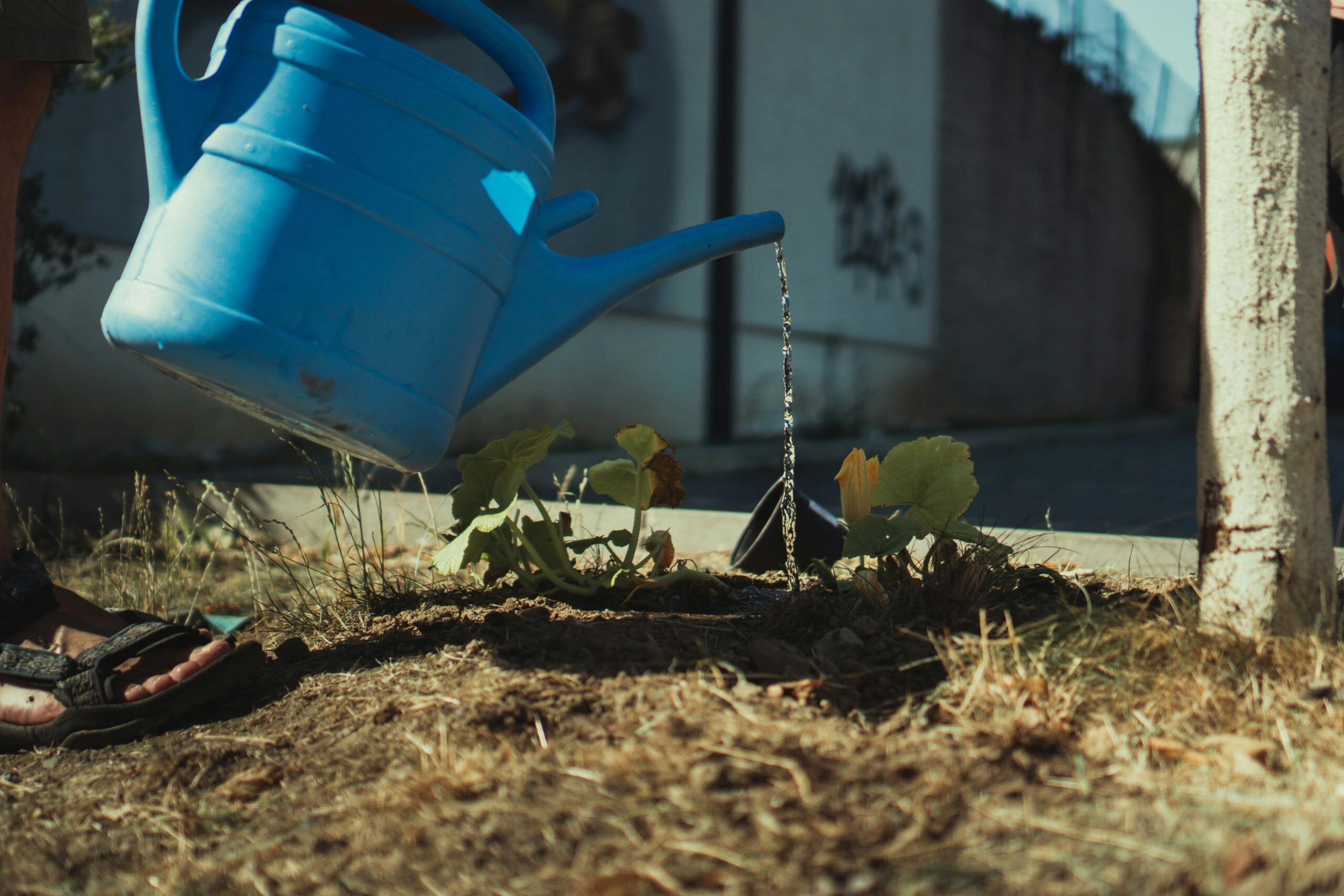
Which to water?
Different vegetables have different needs, so target water where it matters most. Common veg fall into three groups.
Water throughout growth
Fast, continuously growing veg needing roughly 20 litres/m² per week in dry spells:
- Lettuce, salad leaves, spinach
- Oriental greens
- Summer cabbage
- Radish
- Calabrese and cauliflower
- Courgette and cucumber
- Runner beans
Soaking cauliflower and calabrese as the heads begin to swell increases their final size.
Water at key growth stages
- Peas and broad beans — a good soak (20 l/m²) when the first flowers appear, and again as the young pods swell.
- French beans — water when flowering and again as pods form.
- Sweetcorn — a good soak once cobs form and the silks appear.
- Pumpkins and squash — a few good soakings as fruits swell, targeting the centre of the plant.
- Tomatoes, aubergines and peppers — once flowers set fruit, water regularly all summer (ideally 10 l/m² twice weekly).
- Potatoes — once they finish flowering, wet the soil not the leaves, and water through growth to encourage new potatoes.
Before going on holiday, sink pot-grown tomatoes into the ground and soak them well to keep them going.
Water sparingly
Mainly root veg, perennials and over-wintering crops that need little attention once established:
- Beetroot, carrot, parsnips and turnips
- Onions, garlic and shallots
- Asparagus and artichokes
- Brussels sprouts, sprouting broccoli, spring and winter cabbages
Sowing into dry soil? Water the bottom of the seed drill thoroughly and let it soak in before sowing, then cover with dry soil.