
Getting Started
Here are a few things that might be helpful as you get going on your new plot!
-
Plot condition
The allotments have been worked for over a hundred years. Your new plot may not have been worked for a…
-
Stable manure
Available for £1 per wheelbarrow load. It’s best mixed with green waste in a compost heap to help it break…
-
What you may inherit
Plots often carry perennial plants left by previous plotholders: You may also inherit: If you inherit items you don’t want,…
-
Essential tools
You don’t need lots of equipment to start. A fork, tough gardening gloves and a good pair of secateurs will…
-
Your first jobs
Rubbish clearance If you take over in winter there’s likely to be dead vegetation, odd bits of wood and material…
-
What to plant
The usual advice is to plant potatoes for the benefit of the soil and its clearance — you’ll dig three…
-
Neighbours & committee members
Get to know your neighbours — you’ll share water taps and responsibility for access paths. Everyone has a different approach…
-
Our basic principles
At Hatherop Road we ask plotholders to adopt a few basic principles that benefit the whole site: Be as organic…

Hatherop Road Allotments · Guide for new members
These notes are mainly for the new plotholder who may not have much gardening experience — but seasoned gardeners may find a few points of interest too.
Site guidelines
Security
Paths
The path you need to look after is the path on the right-hand side of your plot when viewed from the main path. Woodchip is available and is best laid over a membrane.
On-site toilet
A new flushing toilet was installed in 2021. It’s cleaned by volunteers once a week, but toilet roll isn’t routinely provided so it’s best to bring your own. If you’d like to join the cleaning rota, please contact a committee member. Please leave the toilet as you’d like to find it.
Plot condition
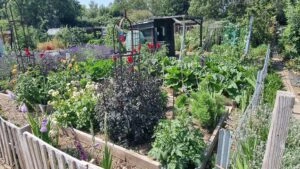
The allotments have been worked for over a hundred years. Your new plot may not have been worked for a year or two, or you may be lucky and take over a well-worked plot. You may not manage to cultivate the entire plot in your first year if it’s overgrown, but it’s worth persevering! The standard 5-rod plot covers about 125 square metres.
Our soil is good quality but varies across the site. It has a modest clay content in the topsoil which helps retain moisture while staying workable and draining adequately. There’s clay subsoil in some areas at about 30 cm depth. It’s a little stony — prehistoric flint tools have been found, and you’ll probably turn up old clay tobacco-pipe stems.
Stable manure
Available for £1 per wheelbarrow load. It’s best mixed with green waste in a compost heap to help it break down. It can also be spread over vacant ground during winter to suppress weeds before being dug in come spring.
You can pay via SumUp or bank transfer (use you plot number as a reference).
Lloyds Bank
Sort code: 30-98-79
A/c number: 02535368
Markhole Allotment Association
What you may inherit
Plots often carry perennial plants left by previous plotholders:
- Fruit bushes such as black/redcurrants and gooseberries
- Cane fruit such as raspberries and blackberries
- Fruit trees — apple and plum are the most common
- Rhubarb, strawberries, artichokes, Jerusalem artichokes, horseradish (a weed to some!)
- Grassed areas and perennial flowers such as lavender, roses, dahlias and sempervivums
You may also inherit:
- A shed — now your responsibility. If it’s padlocked, we’ll let you know if we hold a key; if not, we have bolt cutters. Some sheds may need restoration.
- Compost bins, home-made wooden or plastic. Well-rotted material can go straight onto your plot.
- Water tanks — many were made redundant by the new water system, but they’re useful for dipping cans, or as compost bins if they don’t hold water.
- Concreted areas — useful as a shed or compost-bin base. Slabs or crazy paving can make paths or seating.
If you inherit items you don’t want, offer them to other plotholders via the hut noticeboard, Facebook, or a note in the newsletter.
Essential tools
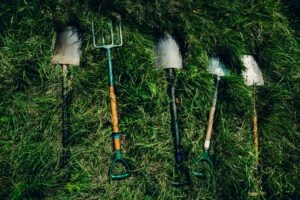
You don’t need lots of equipment to start. A fork, tough gardening gloves and a good pair of secateurs will do on day one, plus a tub or bucket to move loose material and weeds.
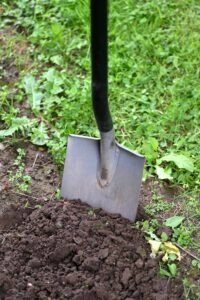
Later on you can add a hoe, rake, watering can and hand trowel/fork as the planting season arrives. You may prefer a spade to a fork — though you might be dismayed by the number of worms you kill! Sundries such as string, scissors, canes and plant-protection mesh can be added as needed. You’ll eventually fill your shed, if you have one.
Your first jobs
Rubbish clearance
If you take over in winter there’s likely to be dead vegetation, odd bits of wood and material to prune from fruit canes.
Do any pruning that’s needed — we can advise on pruning fruit canes, bushes and trees, and prunings can be made into dry hedges, which is good for wildlife. Other waste such as plastic or bricks should be recycled (bricks and metal poles are handy for holding down tarpaulins) or taken to the council bin or tip.
Composting
If you’re lucky you’ll inherit a compost bin; if not, you can make one from wooden pallets or use a plastic bin. The RHS advise placing it in a shady but accessible spot. Whatever type, a bin should keep out rain, allow drainage and airflow, and keep the contents warm.
The ideal mix is 50% green waste and 50% brown waste (though 25% green to 75% brown also works):
- Green waste: soft, leafy material — grass clippings, sappy green plants (like annual weeds), crop waste, old fruit and veg
- Brown waste: dry woody waste — prunings and hedge-trimmings (shredded or chopped), dead stems, straw, and torn-up paper or cardboard. The trick is to break everything into small pieces.
Mix a blend every time you add to the bin, and turn the contents several times a year (fork it over, or empty and reload). In 6–24 months you’ll have compost for your plot — saving money and bringing more biodiversity to your allotment. If you’re struggling, just ask for help.
What to plant
The usual advice is to plant potatoes for the benefit of the soil and its clearance — you’ll dig three times: to clear the weeds, to plant the sets, and to harvest. They’re an easy, low-attention crop, leaving you time for others over summer. A five-metre row gives about 15–20 kg. Sets are readily available, even from pound shops — ask your neighbours how they plant spuds; everyone has a winning secret method!
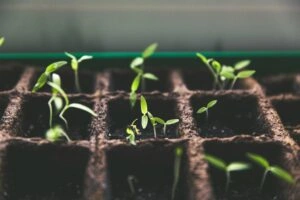
Other easy crops to sow in succession from April to June: beetroot, radish, lettuce, carrots, peas, turnips, parsnips, and runner and French beans. Seed packets carry all the instructions you’ll need. Garden centres sell young cabbage, cauliflower, chilli, tomato, beans, salad leaves and herbs. We hold a spring plant sale in early May, usually with a seed swap. Starting in autumn? Plant garlic, onions and broad beans.
The standard plot can produce up to 300 kg of fruit and veg a year. To hit that you’ll spend 5–10 hours a week on your plot in the first year — but you’ll have more leisure time in the years that follow!
Neighbours & committee members
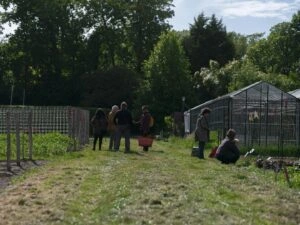
Get to know your neighbours — you’ll share water taps and responsibility for access paths. Everyone has a different approach to gardening, and there’s a wealth of knowledge, advice and help to tap into. A number of plotholders are happy to mentor newcomers; if you’d like a mentor, ask a committee member (names and plot numbers are on the noticeboard).
Our basic principles
At Hatherop Road we ask plotholders to adopt a few basic principles that benefit the whole site:
Be as organic as possible
Chemicals such as pesticides are discouraged — they’re not good for your health, others’ health, the soil, the veg you’ll eat, or the site’s wildlife. If you do use pesticide, please comply with the storage and use rules in the Richmond Allotments Terms & Conditions (7.7).
Encourage diversity of planting
The Council doesn’t permit growing a single crop, and in our experience a wide variety brings real advantages: a range of produce, steady supplies over a longer period, and a better chance of overall success. Diverse crops also support the pollinating insects that many crops depend on.
Reduce waste and recycle
Compost all your green waste, don’t remove topsoil, and take away any dry material that won’t compost or that’s full of weed seed.