What you may inherit
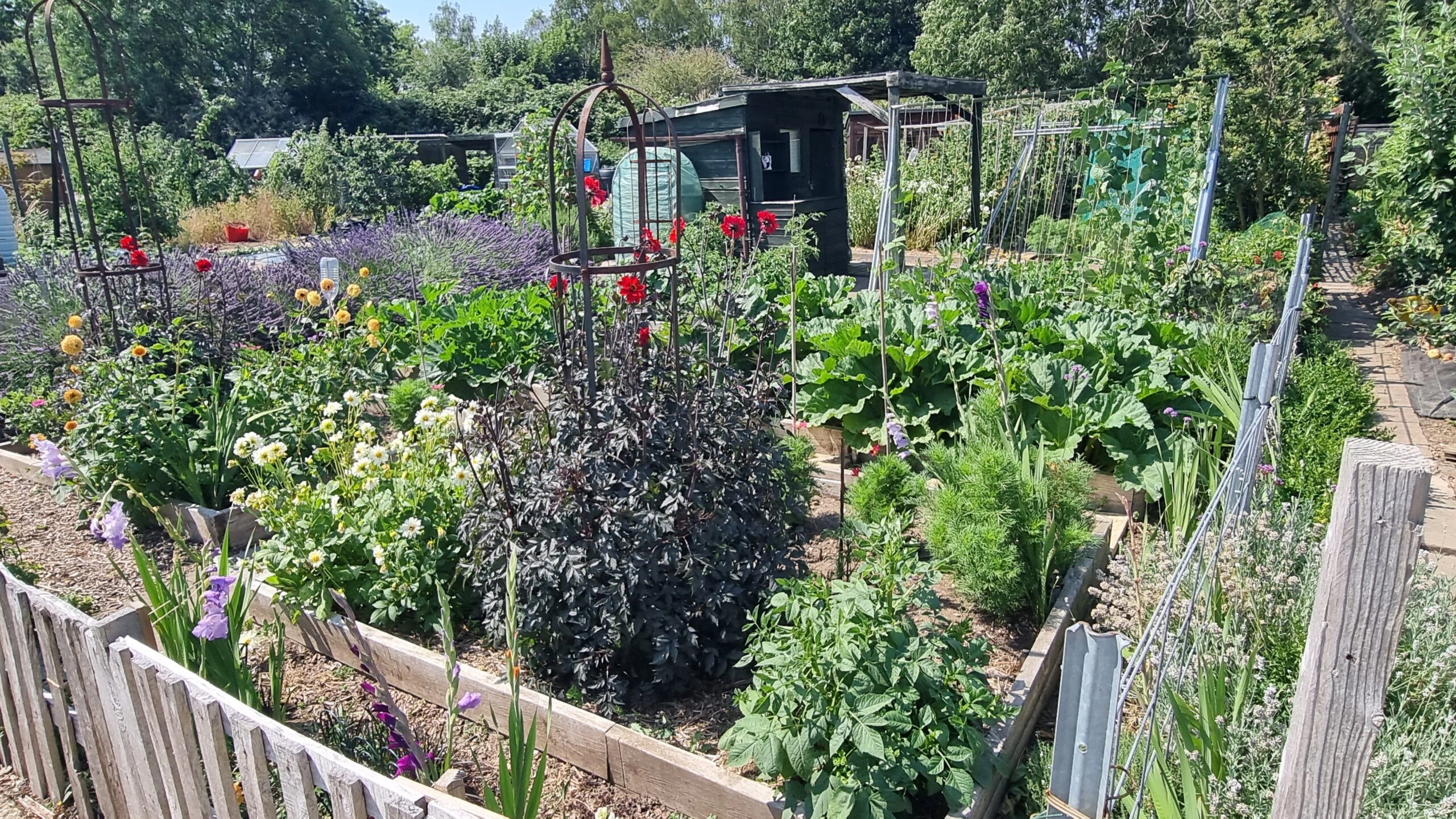
Plots often carry perennial plants left by previous plotholders:
- Fruit bushes such as black/redcurrants and gooseberries
- Cane fruit such as raspberries and blackberries
- Fruit trees — apple and plum are the most common
- Rhubarb, strawberries, artichokes, Jerusalem artichokes, horseradish (a weed to some!)
- Grassed areas and perennial flowers such as lavender, roses, dahlias and sempervivums
You may also inherit:
- A shed — now your responsibility. If it’s padlocked, we’ll let you know if we hold a key; if not, we have bolt cutters. Some sheds may need restoration.
- Compost bins, home-made wooden or plastic. Well-rotted material can go straight onto your plot.
- Water tanks — many were made redundant by the new water system, but they’re useful for dipping cans, or as compost bins if they don’t hold water.
- Concreted areas — useful as a shed or compost-bin base. Slabs or crazy paving can make paths or seating.
If you inherit items you don’t want, offer them to other plotholders via the hut noticeboard, Facebook, or a note in the newsletter.